Papaya puree · Processing lines & equipment

From ripe papaya
to refined puree.

Build the process around your product. Connect fruit preparation, two-stage pulping and refining with the treatment and filling equipment you actually need.

Whole-fruit preparationTwo-stage refiningConnected bulk filling
THE CORE OF THE PUREE LINE
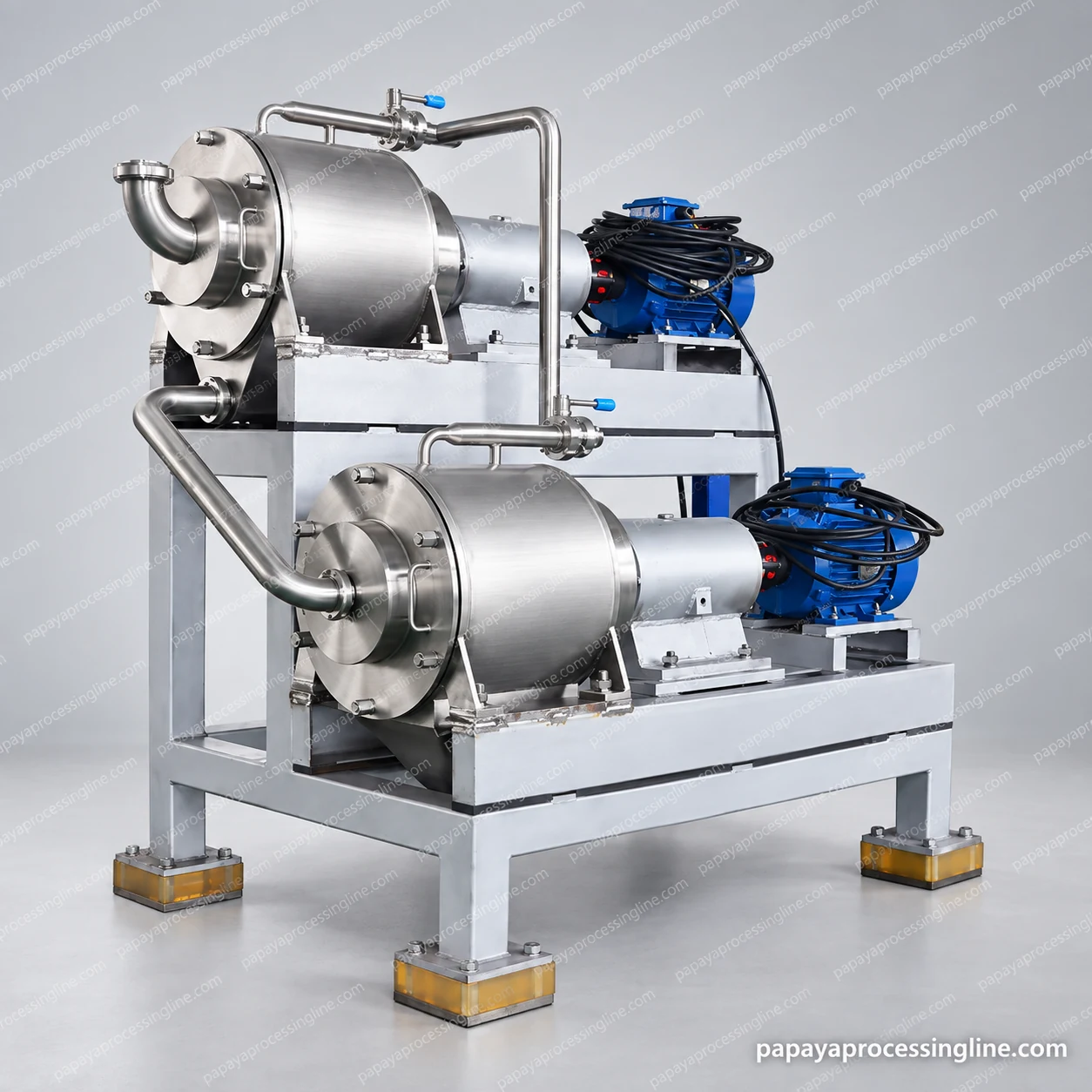
Two-stage stainless steel pulping machine with stacked chambers, two motors and interstage pipework
The complete dual-stage assembly combines pulping and finishing in one machine.
One machine. Two linked stages.Pulper & finisher
↗
01 Prepare fruit→02 Recover & refine→03 Buffer & transfer→04 Treat & fill

Choose your starting point

A line that fits
what you have.

Start with whole fruit or connect to an existing puree supply. The right entry point avoids duplicate equipment and makes every handover clear.

Equipment, stage by stage

Meet the machines
behind the process.

Compare all eight equipment families →
Two-stage stainless steel pulping machine with stacked chambers, two motors and interstage pipework
The complete dual-stage assembly combines pulping and finishing in one machine.

Prepared flesh to screened puree

Two-stage pulper and finisher

A dual-stage pulping and refining machine for prepared papaya flesh. Compare DJ model references, screen selection, residue handling and downstream puree transfer.

View specifications →
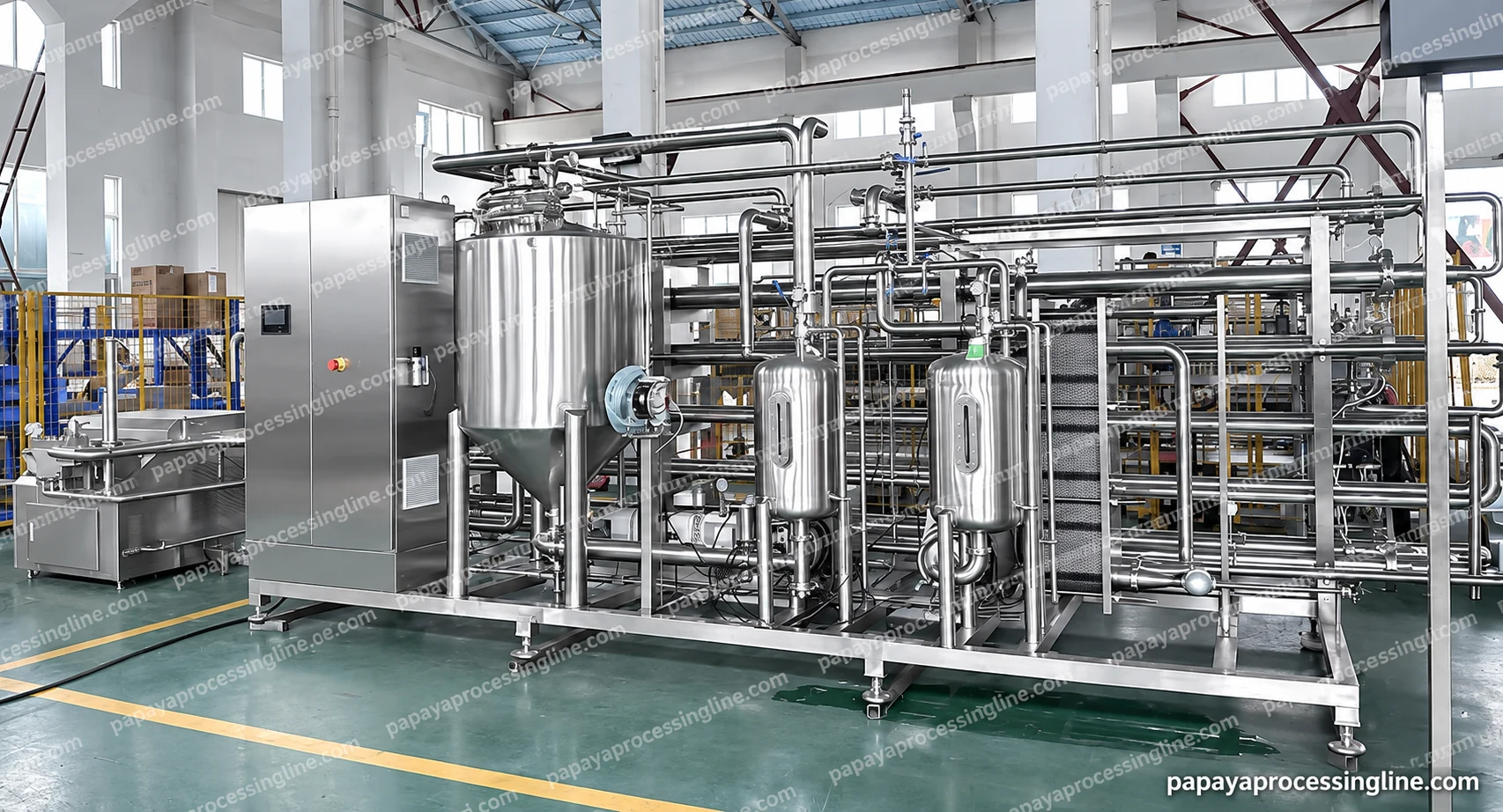
Industrial thermal skid with horizontal tube passes, vessels, pipework and a control cabinet
Tubular treatment assembly with a control cabinet, vessels and a bank of horizontal heat-exchange sections.

Controlled heating, holding and cooling

Tubular thermal processing system

Configure tubular puree heating, holding and cooling around papaya product properties and the validated process, with defined flow, return logic and filling interfaces.

View specifications →
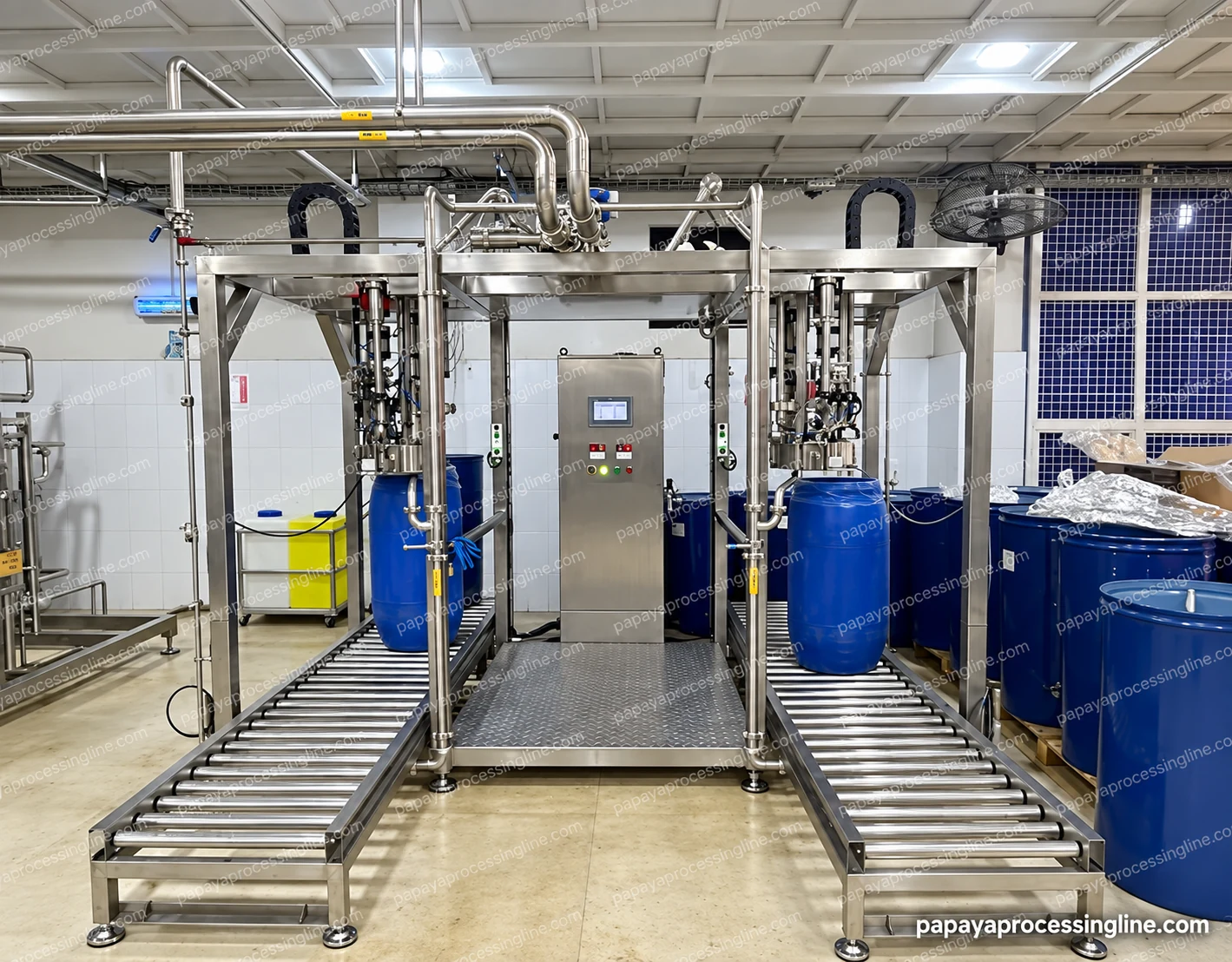
Two-position aseptic filling assembly with blue drums, roller lanes and a central control cabinet
Twin filling positions with drum roller lanes and a central control cabinet.

Bulk puree packaging

Aseptic bag filling system

Plan aseptic bag filling with compatible fitments, product conditions and upstream sterile transfer. Review the twin-position drum arrangement and packaging inputs.

View specifications →

Also explore receiving, washing, inspection, product buffering and cleaning.

Browse the full equipment range →

The material route

See how the line
works together.

Whole-fruit intake, prepared flesh and finished puree have different duties. Match the machines to the material at each stage.

  1. 01

    Prepare ripe fruit

    Wash and inspect the fruit. Define cutting, peeling, seed separation and usable-flesh collection.

  2. 02

    Recover & refine pulp

    Feed prepared flesh into two linked screening stages to reach the agreed puree texture.

  3. 03

    Buffer & transfer

    Coordinate product flow between pulp recovery and the selected downstream equipment.

  4. 04

    Treat & bulk-fill

    Connect the product-specific thermal route with the selected bag and filling-head arrangement.

Explore the complete process flow →

A connected equipment scope

Good equipment.
Clear interfaces.

Bring the material, texture and package together with layout, utilities and cleaning access. Define the supplied scope around a practical product route.

01 · Prepared-flesh feed02 · Matched product handover03 · Access & cleaning boundaries
Explore line engineering →
Industrial thermal skid with horizontal tube passes, vessels, pipework and a control cabinet
Tubular treatment assembly with a control cabinet, vessels and a bank of horizontal heat-exchange sections.

Made for your next process

One fruit.
Different ingredient routes.

Explore puree applications →

Before you specify

Better questions.
A clearer proposal.

Go beyond a headline capacity. Define the material basis, the required texture and the equipment that will remain in your line.

Let’s define your equipment scope

Your product.
The right process.

Tell us your starting material, target puree duty and selected package. We can discuss the equipment and interfaces your project needs.

Discuss your project →