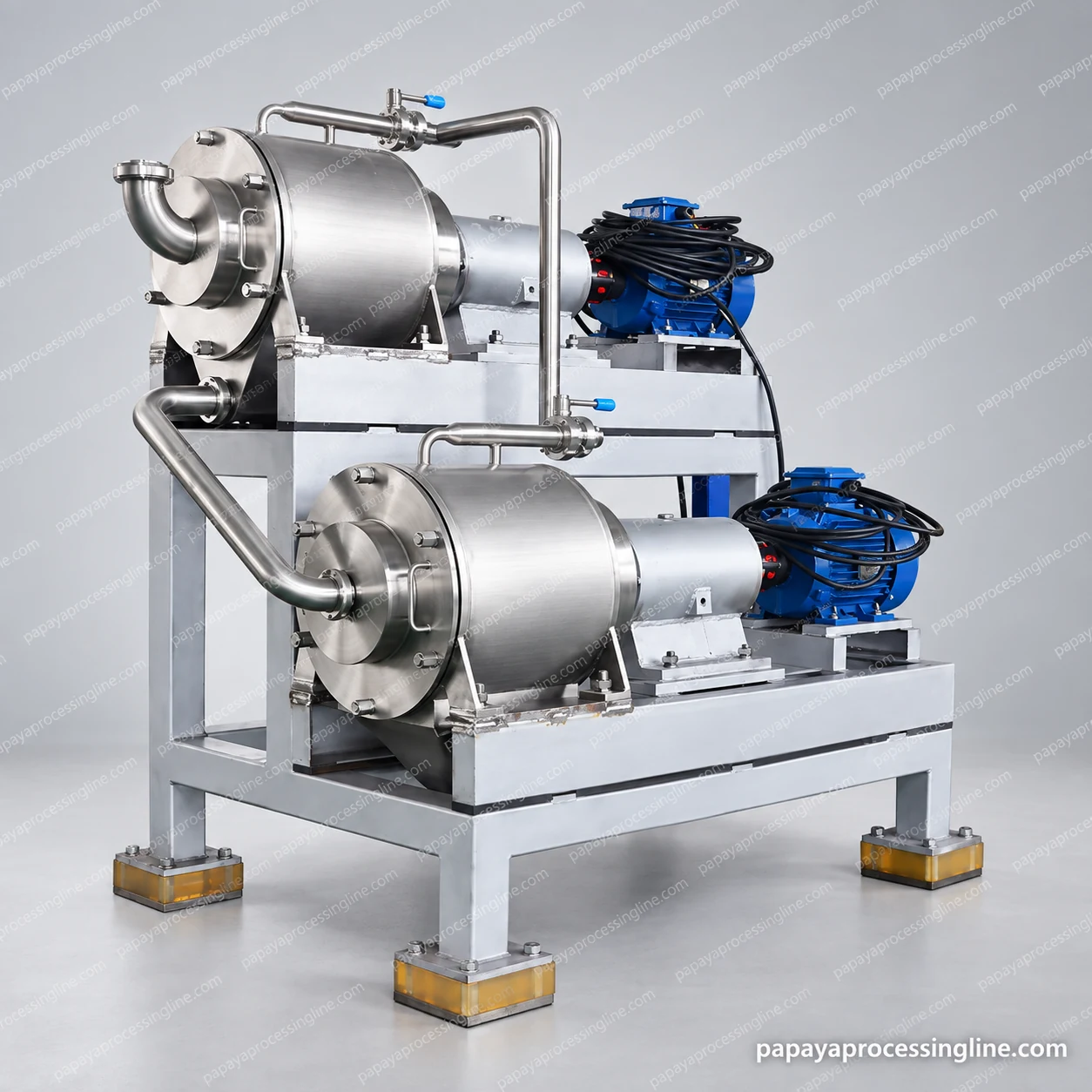
Decide what the beverage line should receive
Whole fruit, prepared flesh and purchased puree require different entry points. A fresh-fruit route needs inspection, cutting, peeling and seed removal before the pulper. A supplied puree may already meet the texture requirement.
Papaya puree is the ingredient at this line boundary. Blending water, sweeteners or other fruit ingredients, and retail bottle filling, need their own specified equipment; they are not automatically included in the pictured puree route.
Specify pulp texture before choosing the screen
Define whether the beverage should retain visible pulp or use a finer puree. Compare representative samples for particle appearance, mouthfeel and how the puree disperses in the intended formulation.
Use the agreed sample to select the pulper-finisher configuration. Check recovered product and rejects together rather than treating a smaller screen as a guaranteed improvement in usable yield.
| Selection point | Information to confirm |
|---|---|
| Input | Whole fruit, prepared flesh or an existing puree |
| Texture | Sample of the intended beverage ingredient |
| Handover | Purée temperature, flow and receiving tank connection |
| Packaging | Bulk ingredient supply or connection to a separate beverage line |
Connect preparation, treatment and the next process
Buffering helps separate short preparation interruptions from the next operation. Set the product handover rate and arrange pump controls so a stopped receiving vessel does not cause an uncontrolled buildup upstream.
Where thermal processing forms part of the supply, specify it with the product formulation and preservation route. Send the blend concept, target production basis and existing equipment connections with your enquiry.
Questions in practice
Before connecting the equipment
Is this also a complete bottled-juice line?
The equipment scope shown prepares and handles papaya puree. Beverage blending, bottle preparation and retail filling are separate scope items to define in the project discussion.