Begin at a clear product handover
The package starts where prepared pulp is collected from an existing pulper, storage vessel or unpacking operation. A usable connection specifies the product state as well as the pipe: available pressure, temperature, consistency, residual particles and the pattern of supply all affect the next stage.
Prepared flesh is a different feed from refined puree. Flesh still requires pulping; coarse pulp may require refinement; a puree that already meets the texture requirement can proceed directly to its feed vessel. This distinction avoids installing a duplicate refining stage or sending unsuitable material into the thermal circuit.
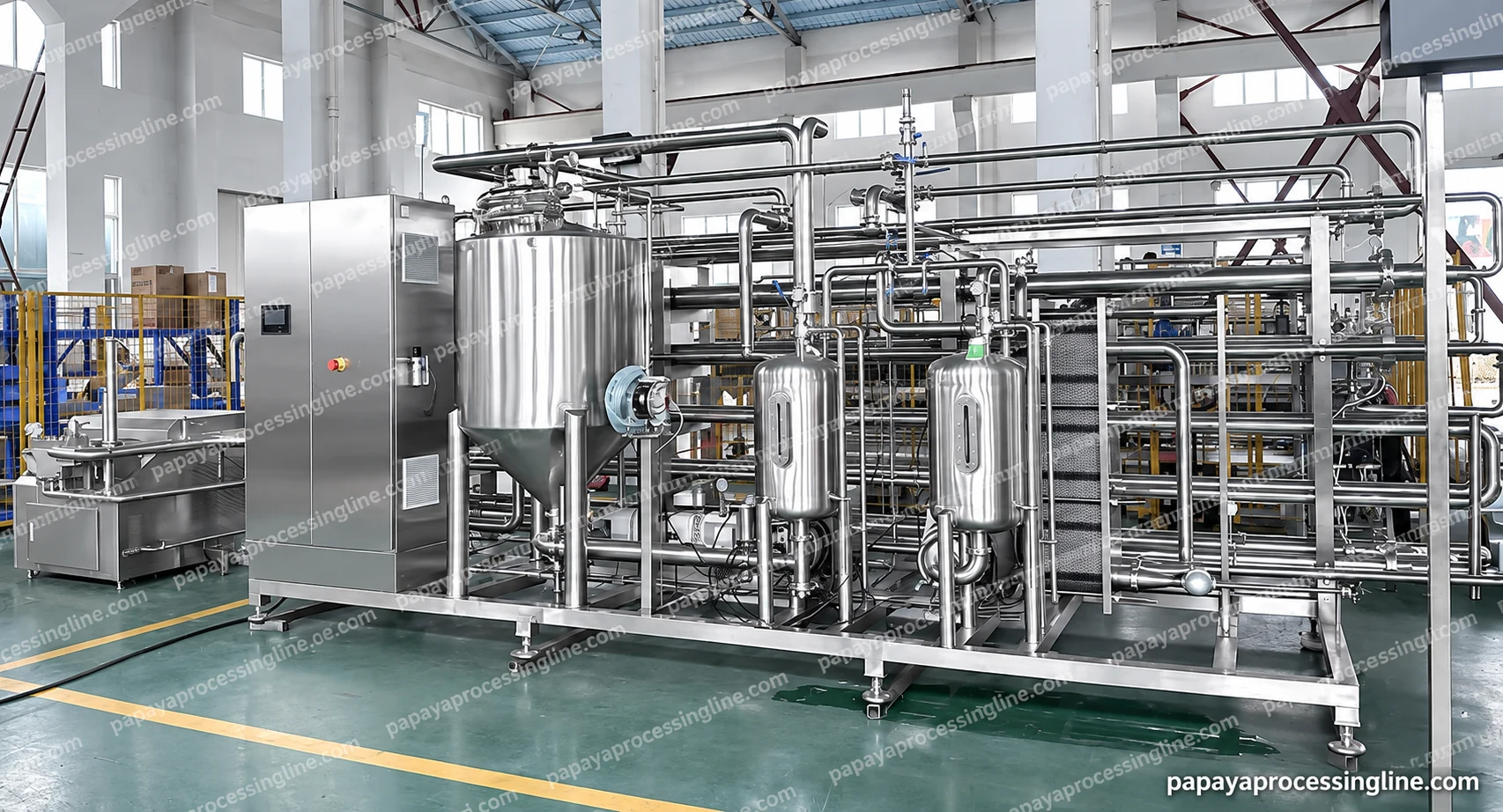
Heat, hold and cool within a connected product circuit
The transfer pump feeds puree through the tubular product passage. Indirect heat exchange raises its temperature, the holding section provides the designed residence, and the cooling section brings it to the specified filling condition. Product flow and thermal duty are selected together; changing one can change the performance of the other.
Instrumentation and controls coordinate the product pump, heating and cooling services, and the downstream filler. The selected design must define what happens during startup, a feed interruption or an out-of-condition event, including the product route and the conditions required before filling resumes. A universal papaya time-and-temperature setting is not part of the equipment specification.
Match the bag, filling head and handling sequence
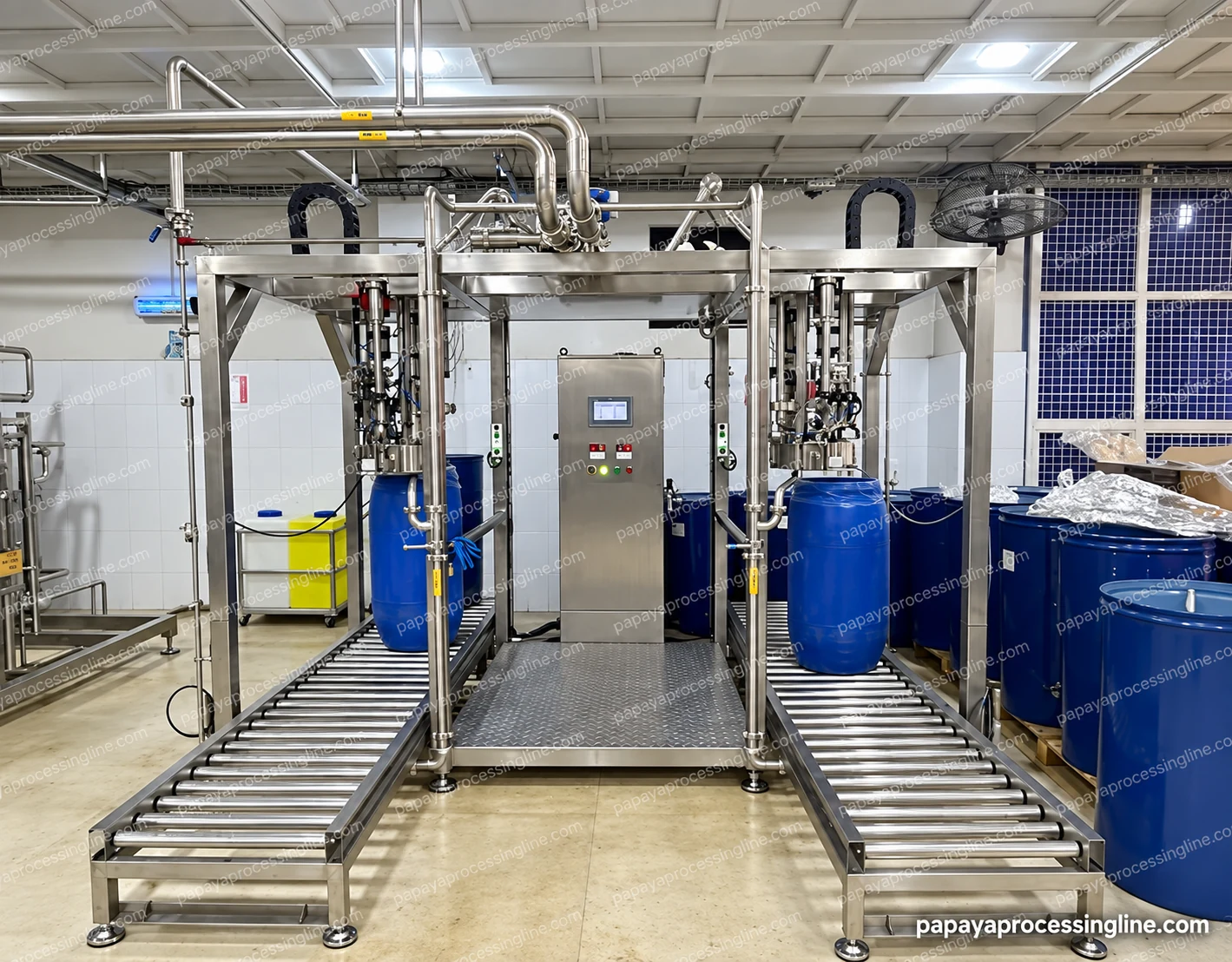
The aseptic filler receives treated product through its protected product connection. The selected bag fitment must suit the filling head and its operating sequence. Bag placement, closure handling, filling measurement and removal of the filled container form one cycle; they must all fit the planned production rhythm.
The pictured twin-head configuration provides two filling positions with drum-handling lanes. Its useful output depends on the selected fill quantity and the complete cycle, including bag changes. Thermal processing, the aseptic product connection and packaging operation need a validated sequence for the intended product and storage conditions.
Use the buffer to manage defined interruptions
The feed vessel gives the thermal unit a controlled supply while upstream pulp delivery varies. Its operating level range leaves room for incoming product without starving the outlet. Low-level, high-level and downstream-ready signals are part of the integration design; their effect on each pump and valve is documented.
Buffering has a finite duration. A long filler stoppage or loss of the required process conditions needs a defined stop and recovery procedure, not simply a larger tank. Product routing, temperature exposure and the condition of the filling boundary must remain controlled through the interruption.
Include cleaning paths and commissioning boundaries
CIP supply and return paths are coordinated with the feed vessel, transfer circuit and thermal equipment. Each route needs its own operating conditions and a clear return connection. Cleaning the product circuit and establishing the aseptic condition of the filling system are separate operations.
The handover scope identifies the equipment, utility connection points, control interfaces, operating documents and agreed commissioning work. Water circulation can demonstrate flow and connections; representative product trials and process validation address different questions. Finished-product acceptance belongs to the defined product, process and packaging combination.
Questions in practice
Before connecting the equipment
Can the thermal package use an existing puree supply?
Yes. The existing outlet is assessed for product texture, temperature, pressure, flow and continuity of supply. The new package can include a buffer and transfer arrangement where those conditions need adjustment.
Does an aseptic bag filler make untreated puree shelf-stable?
No. Filling is one part of a complete preservation system. The product process, equipment condition, aseptic connection, packaging and intended storage all need to be validated together.
Is beverage blending included?
Blending tanks and ingredient handling are a separate application scope when a formulated beverage base is required. They are not necessary for every puree treatment package, and the final formulation must be included in thermal and filling selection.