Clear and clean the open preparation area
Fruit, peel, seeds and trim are removed from the preparation area before the cleaning sequence begins. Work surfaces, utensils, flesh containers and waste containers have separate roles and must remain identifiable. Collection points should be accessible without moving waste through the prepared-flesh route.
Cleaning access includes the underside of work surfaces, collection points and nearby drains. The plant procedure defines the cleaning agents, application method and verification required for these surfaces. Equipment isolation and safe handling of cutting tools come before work close to moving or sharp parts.
Reach the surfaces hidden during production
Conveyor cleaning includes the belt, guides, transfer points and accessible areas around the return path. The elevator has additional collection points around its lifting surface and discharge. Drive and electrical components are protected according to the equipment instructions rather than treated as general washdown surfaces.
The brush washer needs inspection around the rollers, spray outlets, collection area and drain path. Fruit washing does not clean the machine itself. Remaining material, blocked spray outlets or poorly drained water can only be assessed when these areas are accessible.
Inspect the pulper screens and residue paths
The pulper-finisher has two chambers, an interstage passage, screens and separate outlets. Their cleaning plan follows the actual disassembly and access instructions. Removable parts need a handling and cleaning area, and their condition is checked before reassembly.
Screen openings, seating surfaces and product or residue outlets deserve direct inspection. Reassembly restores the correct fit and protection before restart. Connecting a rinse or cleaning supply does not by itself establish that every screen, seal or concealed surface is clean.
Assign CIP routes to the closed equipment
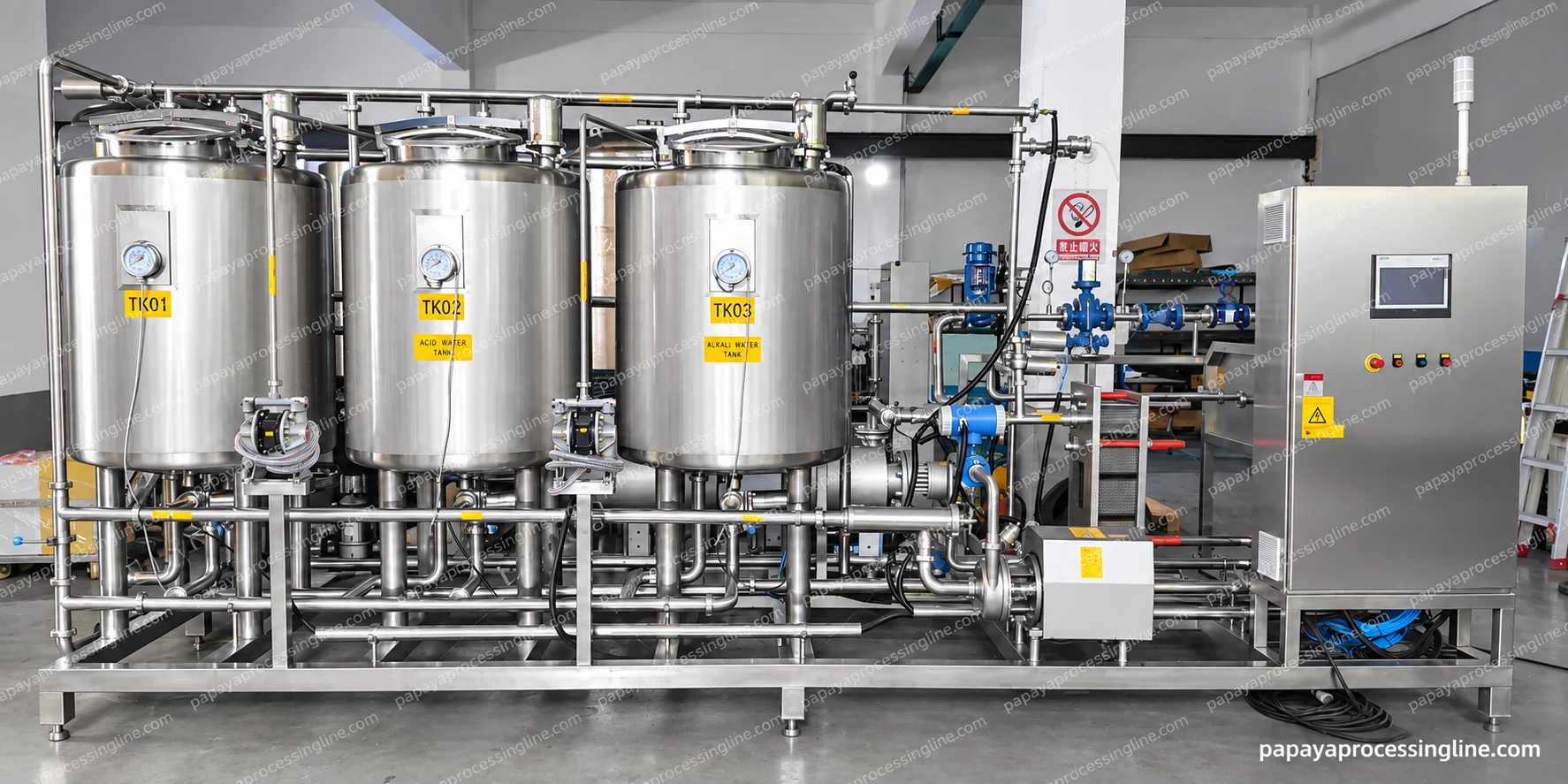
The CIP unit provides cleaning solution storage and circulation through selected closed routes. Tanks, transfer piping and thermal equipment need coordinated supply, return and drainage connections. The selected route, flow, temperature, chemical conditions and duration belong to the cleaning procedure for that equipment and product.
Tank surfaces, valve arrangements and pipe circuits can impose different cleaning duties. The return path must carry the cleaning medium back as intended, and the procedure includes the checks needed before product is reintroduced. The selected controls implement the documented cleaning sequence for each circuit.
Verify cleaning before the next production sequence
The operating procedure identifies how cleaning completion is checked, how equipment is reassembled and how cleaning materials are cleared from the product route. A product change may introduce additional concerns where a beverage formulation uses other ingredients.
Cleaning and establishing the aseptic condition of a filling system are distinct tasks. The filler’s required preparation and restart sequence remains part of its validated operation. Neither open-area washing nor completion of a CIP cycle alone demonstrates the readiness of the complete preservation and packaging system.