Receive, wash and inspect the fruit
The elevator transfers fruit between receiving and processing heights. Its loading point, discharge and transition into the washer are arranged to avoid uncontrolled drops and congestion. The brush-and-spray washer provides a visible cleaning zone; contact with the fruit must be assessed against the firmness of the incoming lot.
A flat inspection belt gives operators access to the fruit before preparation. Sorting remains a manual operation on this conveyor. Defective fruit and foreign material leave the food stream here, with separate collection space beside the line.
Make the preparation area part of the line
Clean fruit passes to a preparation area for cutting, peeling and removal of the seeds from the central cavity. A practical arrangement provides a stable cutting surface, a separate route for peel and seeds, and clean collection of usable flesh. This is a defined work area and feed interface; the pulper receives prepared flesh rather than relying on a stone-removal mechanism.
The workstation layout and labour arrangement determine how steadily flesh reaches the machine. Fruit size, firmness and the preparation method are evaluated together, including the reach between belt, work surface and collection point. Existing preparation equipment can remain upstream when its discharge and cleaning arrangements fit the new line.
Recover pulp and refine it in a single machine
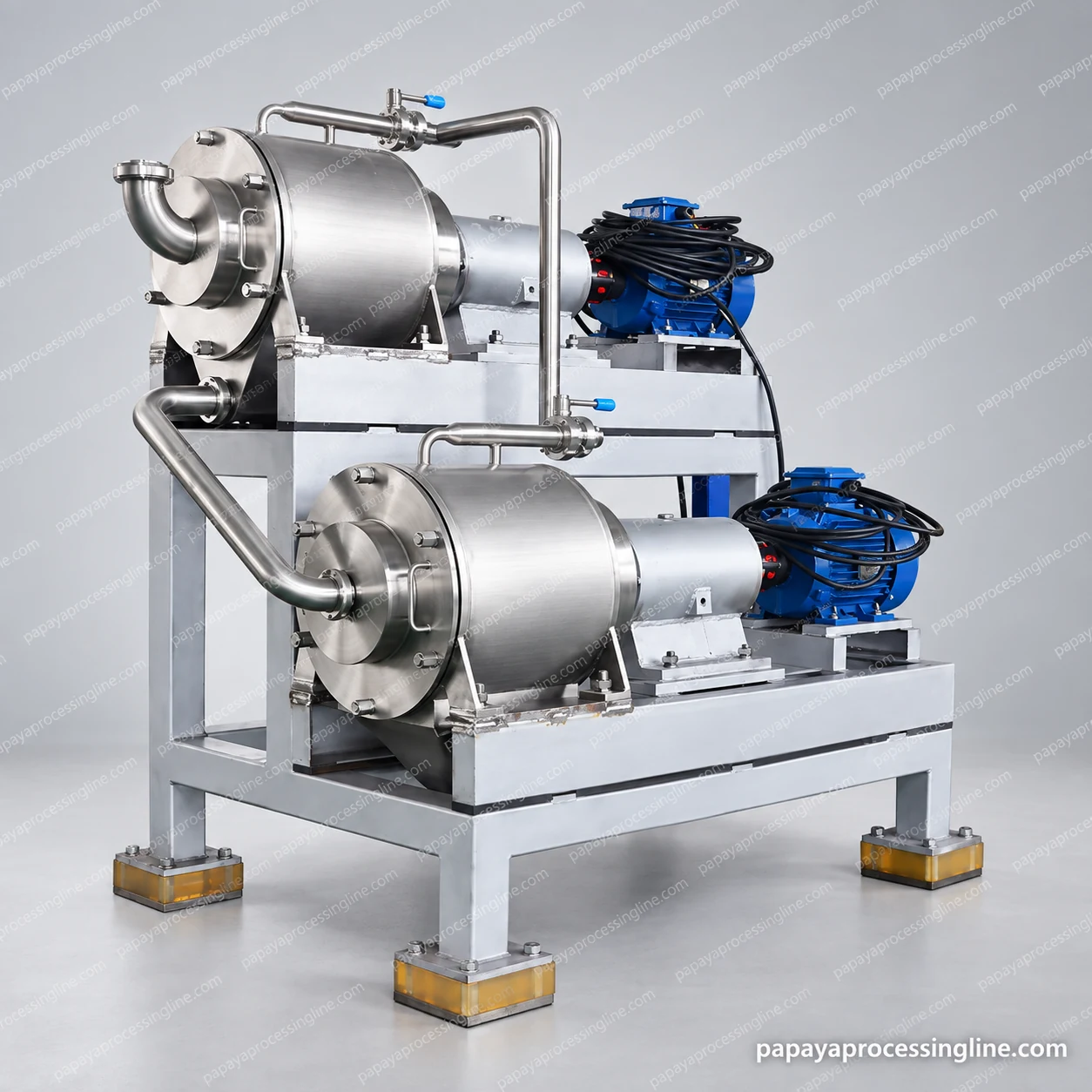
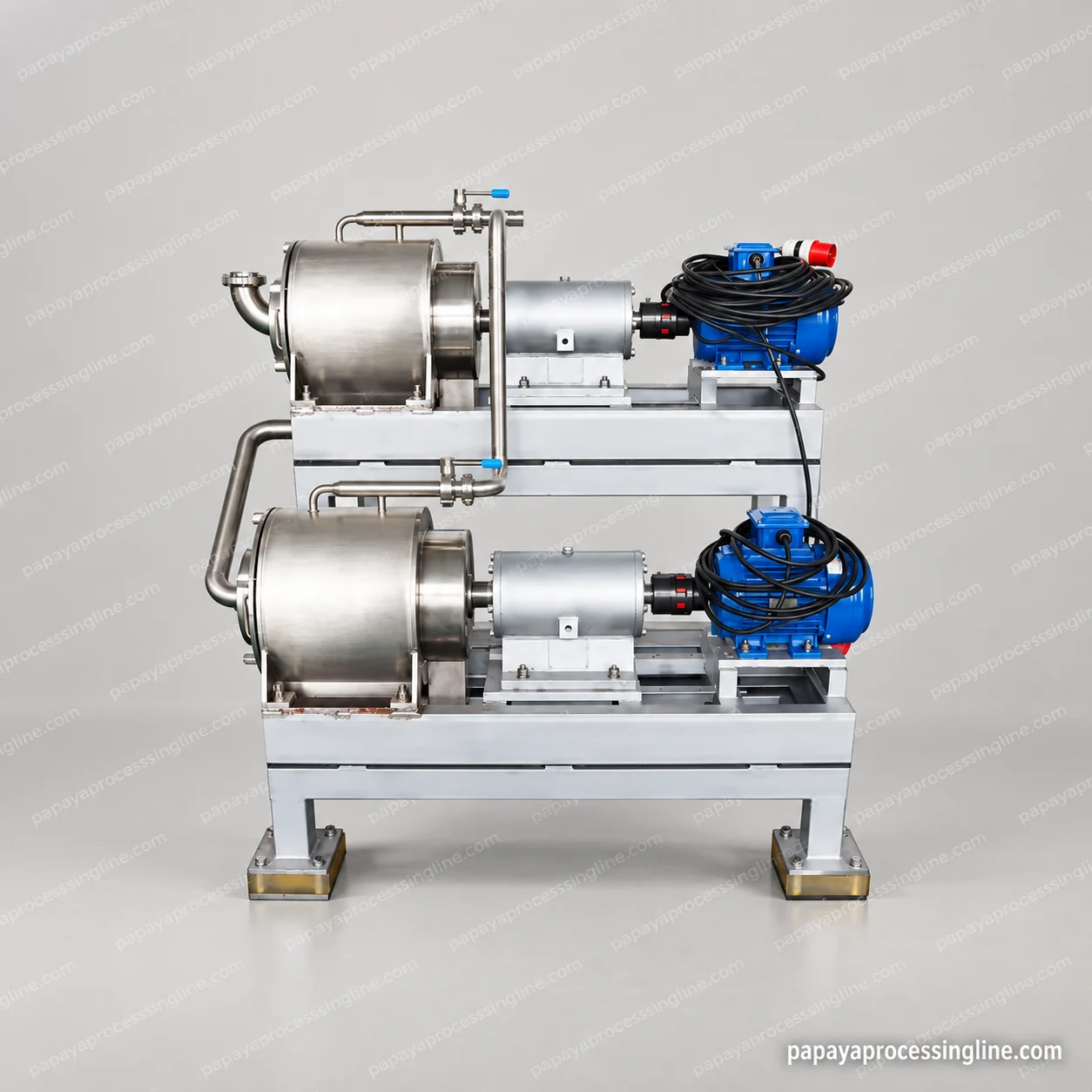
Prepared flesh enters the upper processing chamber. The driven rotor works the material against a screen, allowing pulp to pass while separated material leaves through the reject outlet. An interstage connection carries the pulp into the lower chamber for further screening. Separate drives serve the two stages.
Screen selection is assessed with representative flesh and the intended puree texture. The useful result is a sample with an agreed appearance and consistency, alongside measured product and reject streams. A smaller screen opening alone does not establish better recovery or a seed-free product.
Connect the puree to its preservation route
A buffer tank and matched transfer pump separate short variations in pulp production from the feed required by downstream equipment. Working volume, outlet arrangement and pump duty are selected for the actual puree temperature and flow behaviour. A tank is an operating buffer, not an unrestricted holding area.
The downstream package can combine tubular heating, a holding section, cooling and an aseptic bag filler. The thermal process and filler must operate as a coordinated system. Product pH, formulation, the required process and the selected bag fitment determine the configuration. A different preservation route needs its own equipment and operating design.
Size the stages using separate material balances
Fresh-fruit intake includes material that will leave as peel, seeds, rejected fruit and screening residue. The resulting puree flow is therefore established separately from the receiving rate. The preparation area, pulper, buffer and filling equipment are then matched to a common production schedule, including stops for cleaning and bag changes.
The equipment arrangement includes access for screen removal, waste collection, drain points and utilities. Open fruit-handling equipment is cleaned directly; closed tanks and product circuits connect to suitable CIP routes. These two cleaning tasks remain distinct in both the layout and operating instructions.
| Line boundary | What the configuration covers |
|---|---|
| Fruit handling | Elevator, washer and inspection conveyor, with transfer heights and operator access. |
| Preparation interface | Cutting, peeling, seed removal, flesh collection and waste routes coordinated with the feed point. |
| Puree recovery | One dual-stage pulper-finisher, product collection, buffer storage and transfer. |
| Selected downstream scope | Thermal treatment, bulk filling and connected cleaning circuits, or a defined outlet to existing equipment. |
Questions in practice
Before connecting the equipment
Can the line connect to an existing peeling and preparation area?
Yes, the line can be arranged around an existing preparation area. The useful handover is prepared flesh with a defined feed method, delivery height and rate. Collection, waste removal and cleaning access are checked at that boundary.
Are a pulper and a finisher two separate machines in this line?
The featured machine combines two linked processing stages on one frame. Its upper and lower chambers perform pulping and refining. It is specified as one dual-stage pulper-finisher.
Does the whole-fruit rate equal the quantity of packaged puree?
No. Fruit rejection, peel, seeds, screening residue and process losses affect the recovered quantity. Fresh-fruit intake and finished puree output need separate measurements and a common time basis.