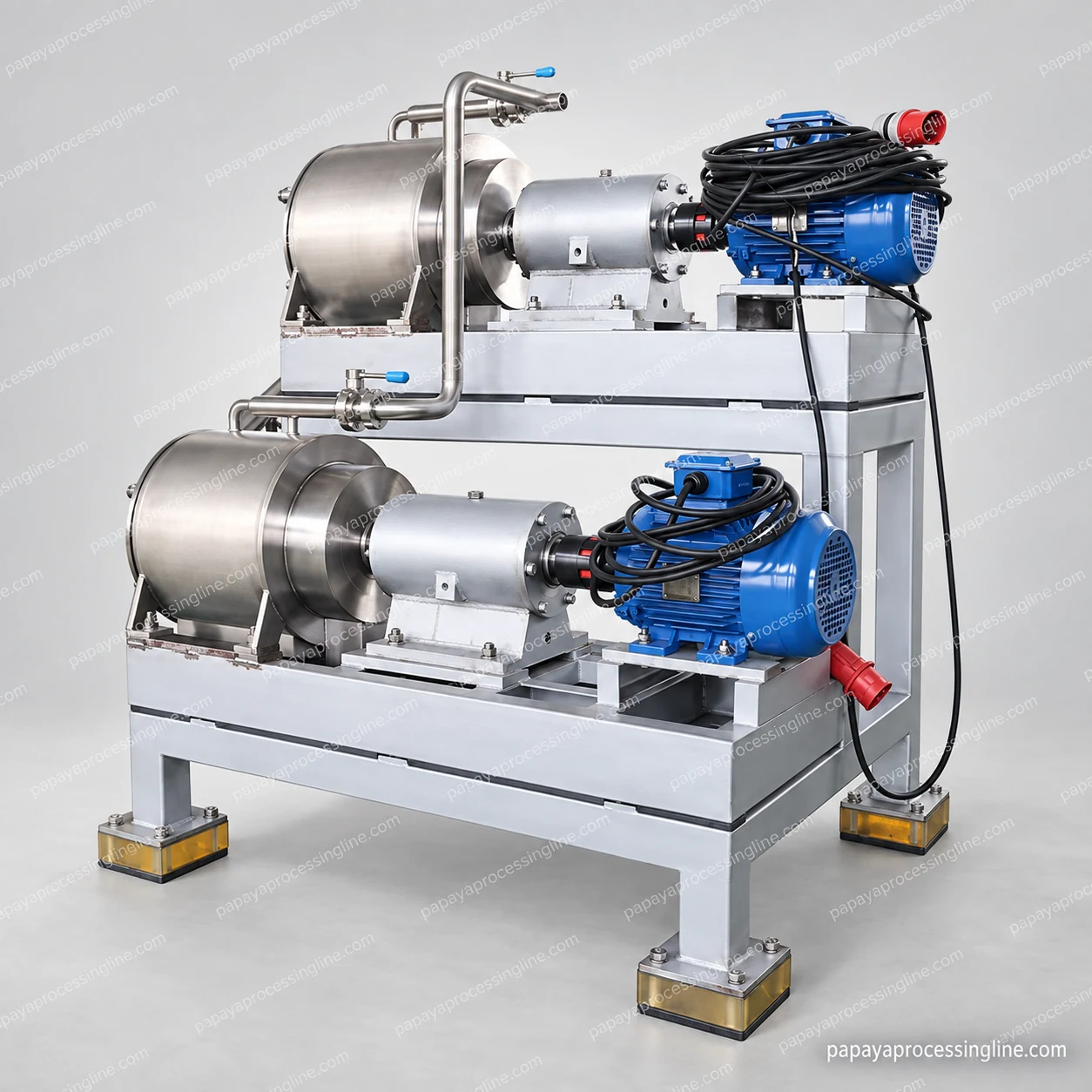
See the machine through its working components
The pulper-finisher has two processing chambers, separate drives, an interstage product connection and distinct material outlets. Inspection and maintenance focus on the rotor and screen condition, seals, drives and the surfaces where pulp or residue collects. Access to those areas must remain available after installation.
On the handling side, belt support, transfers and guarded drive areas shape the conveyor arrangement. The washer adds fruit-contact rollers, spray distribution and water collection. These are different construction tasks from a closed vessel or a thermal product circuit, and their cleaning methods differ accordingly.
Make product and service connections accessible
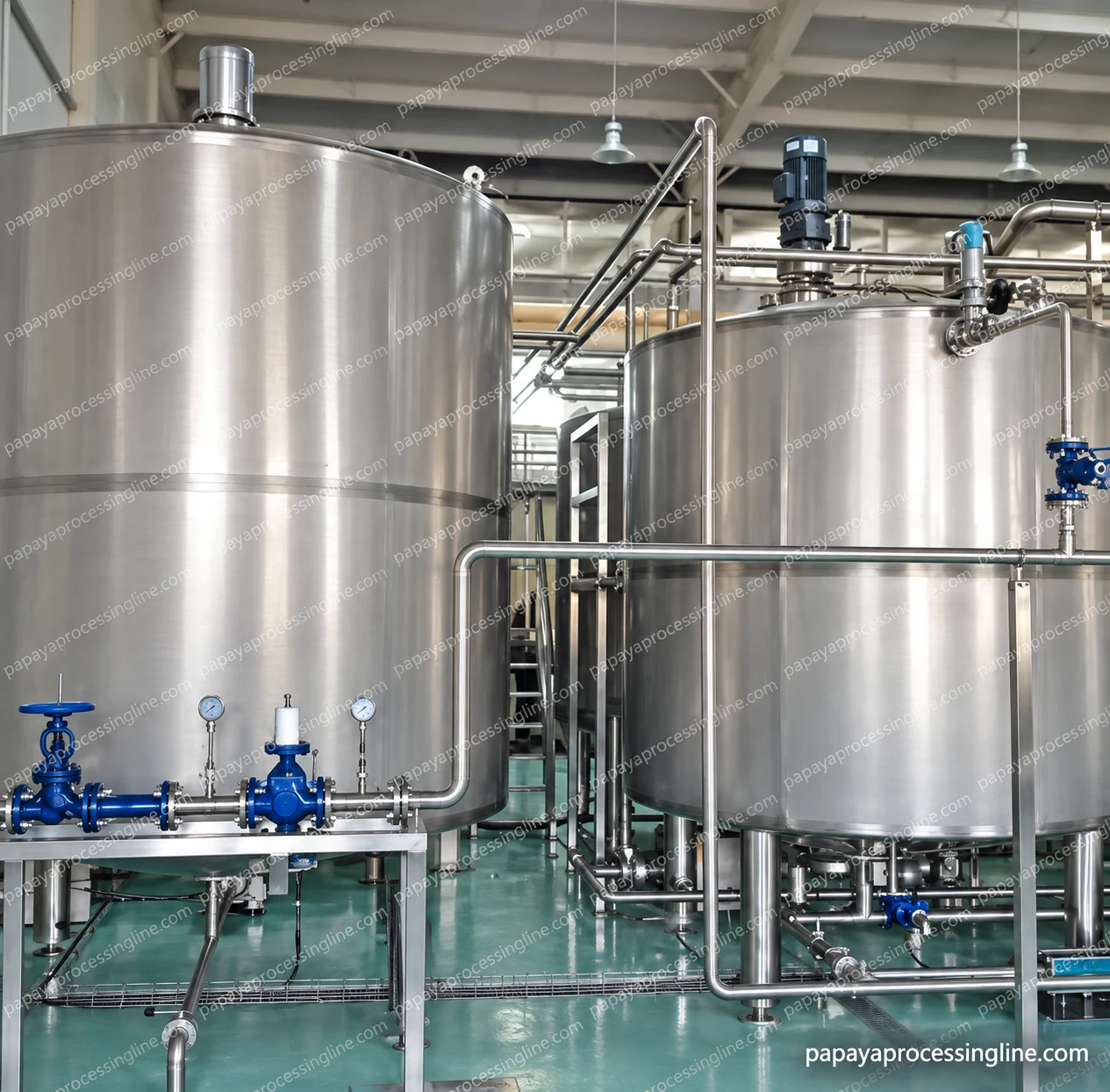
Vessels and transfer equipment connect the pulper outlet to a controlled product feed. Outlet position, working level range, access and the pump connection are resolved together. When blending is required, the vessel arrangement also considers ingredient entry, agitation and any selected heating function.
Thermal and cleaning circuits introduce valves, instruments, service connections and return paths. Their equipment schedule identifies the selected construction, product-contact materials, connections and operating duty. The connection drawings carry these details into installation and maintenance.
Coordinate engineering with installation
Engineering support can include process design, equipment arrangement and integration of the selected machines with plant utilities. Installation and commissioning support, operating guidance and training can be included in the project scope. The work is defined around the actual equipment and the facilities at the destination.
The handover documents identify supply limits, connection points, operating instructions and the service tasks included. For an extension to an existing plant, the existing equipment and site work remain visible in the layout and commissioning plan. This is especially useful when a new thermal and filling package connects to an established pulp-production area.
Separate mechanical checks from product acceptance
The project test plan defines which checks take place at the factory and which require the installed line or actual product. Conditions and results belong in the corresponding records. An empty run or water test cannot establish papaya recovery, finished-product quality or storage life.
| Check | What it establishes |
|---|---|
| Assembly and mechanical inspection | Equipment identity, accessible construction, connections, guards and operation of the selected components. |
| Water circulation and control checks | Flow paths, connections, instruments and the agreed operating sequence under the test conditions. |
| Representative product trial | Observed feeding, pulp texture, residue, transfer behaviour and output for the tested material. |
| Site acceptance | The installed equipment and interfaces perform the agreed functions with the available site services. |
| Preservation and package validation | Evidence for the defined product, process, packaging and storage route; separate from a mechanical run. |