Choose the ingredient the cooking stage needs
A jam operation may require a smooth puree, a coarser pulp or a separate fruit-piece addition. Establish this texture before deciding which fraction should pass through the pulper-finisher.
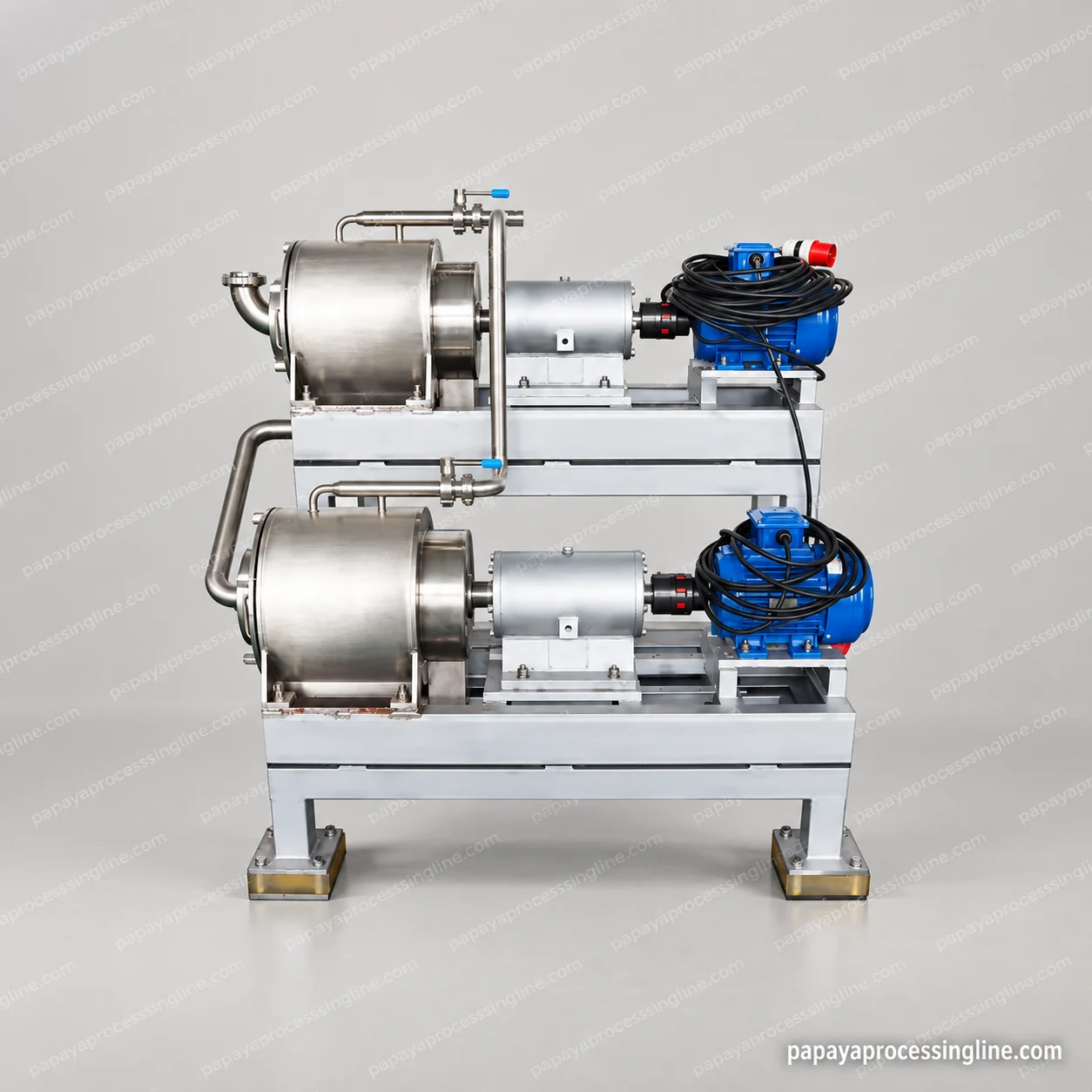
The featured equipment processes prepared flesh and handles recovered pulp. Cutting fruit pieces, recipe dosing, cooking and jar filling are separate operations and must be identified in the project scope.
Measure preparation loss and pulp recovery separately
Fruit quality, peeling, seed removal and screening determine the ingredient available for the cooking batch. Record each material stream so the required raw-fruit intake follows from actual recovery rather than a nominal machine rating.
Compare the sample after preparation and after screening. This helps distinguish changes caused by raw fruit from changes caused by the extraction stage, and prevents unnecessary refinement of an acceptable ingredient.
| Selection point | Information to confirm |
|---|---|
| Ingredient | Smooth puree, coarse pulp or separate fruit pieces |
| Batch basis | Required papaya ingredient per cooking batch |
| Preparation | Peel and seed separation before machine feeding |
| Handover | Collection vessel, temperature and batch timing |
Match the buffer to batch cooking
A continuous preparation stage and a batch kettle rarely follow the same rhythm. Define how puree is collected, released and cleaned between the two operations, including what happens when the next batch is delayed.
Provide the cooking equipment inlet, batch timing and available floor layout with the enquiry. Product storage, thermal processing and recipe conditions belong to the agreed downstream process rather than an assumed standard setting.
Questions in practice
Before connecting the equipment
Does the pictured line include a jam cooker?
No cooker is part of the eight pictured equipment assemblies. The puree supply can be arranged around a defined handover to your separately specified cooking operation.