Describe the product and the path it must follow
The transfer requirement includes the puree temperature, residual particles and observed flow behaviour. A duty based only on a water-flow figure does not describe the actual ingredient moving through the line.
Show the route between vessels and connected equipment, including changes in level, pipe length and the receiving connection. These details determine the usable operating duty together with the required product rate.
Coordinate pump operation with the next stage
A controlled thermal feed and a batch receiving vessel can demand different operating sequences. Establish the conditions that start, stop or restrict the transfer, and what happens when upstream pulp production continues during a pause.
The product circuit should also have a defined cleaning route. Drainability, access and isolation between production and cleaning matter at the same interfaces used for normal transfer.
| Selection point | Information to confirm |
|---|---|
| Product | Puree temperature, texture and residual particles |
| Required flow | Product quantity and continuous or batch pattern |
| Pipe route | Connections, elevation and available layout |
| Controls | Tank level, receiving availability and cleaning states |
Use existing connection information for a retrofit
When replacing a pump or adding a treatment package, supply the existing product route and operating observations. This is more useful than requesting an isolated replacement by an assumed nominal capacity.
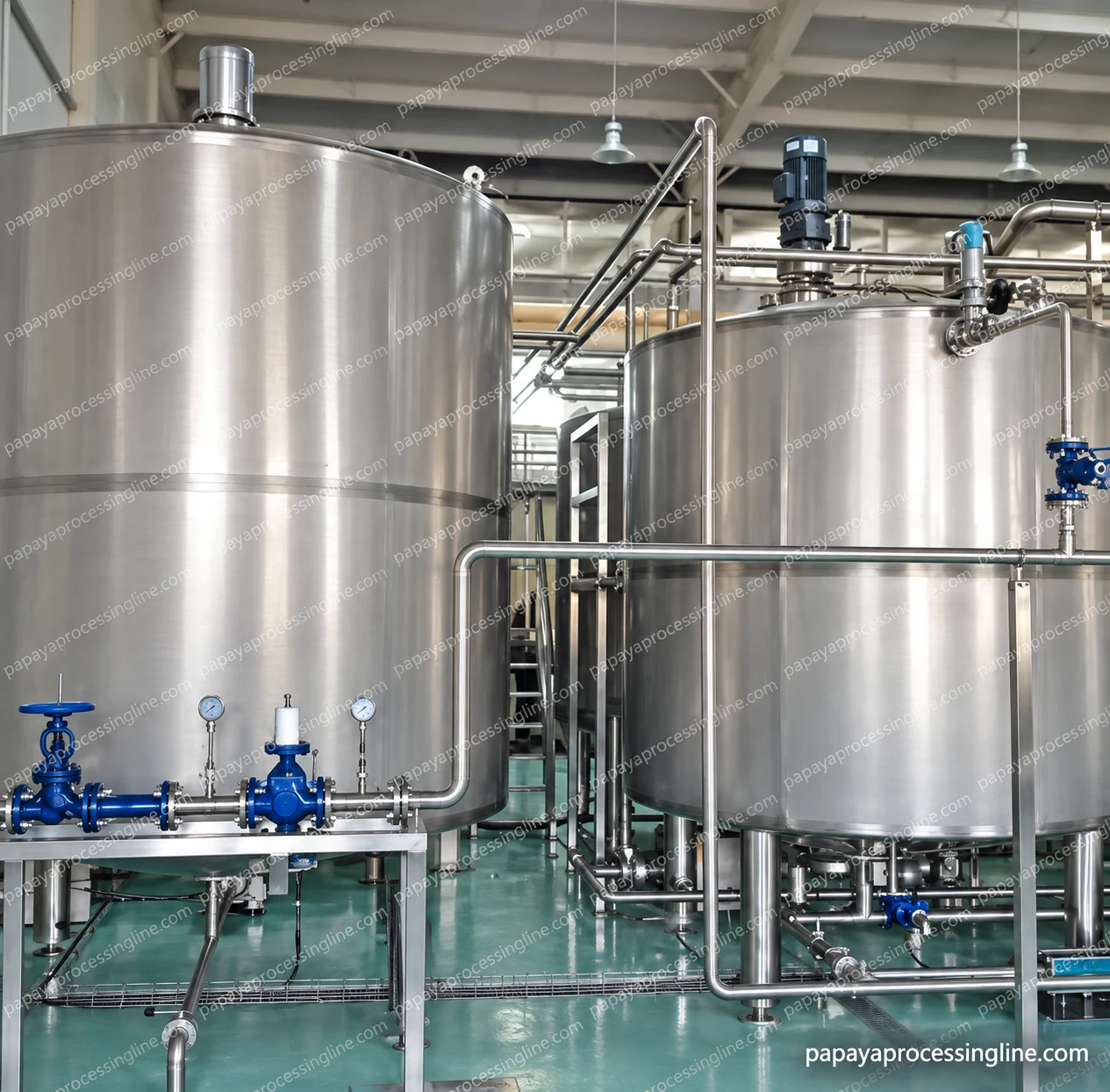
Final selection should confirm the actual pump configuration against the agreed duty. The photographed tank assembly does not establish one universal pump type or model for every papaya formulation.
Questions in practice
Before connecting the equipment
Can the same transfer duty serve every puree?
Temperature, texture, particles and the connected route can change the required duty. Specify the actual product and process boundary before choosing the configuration.