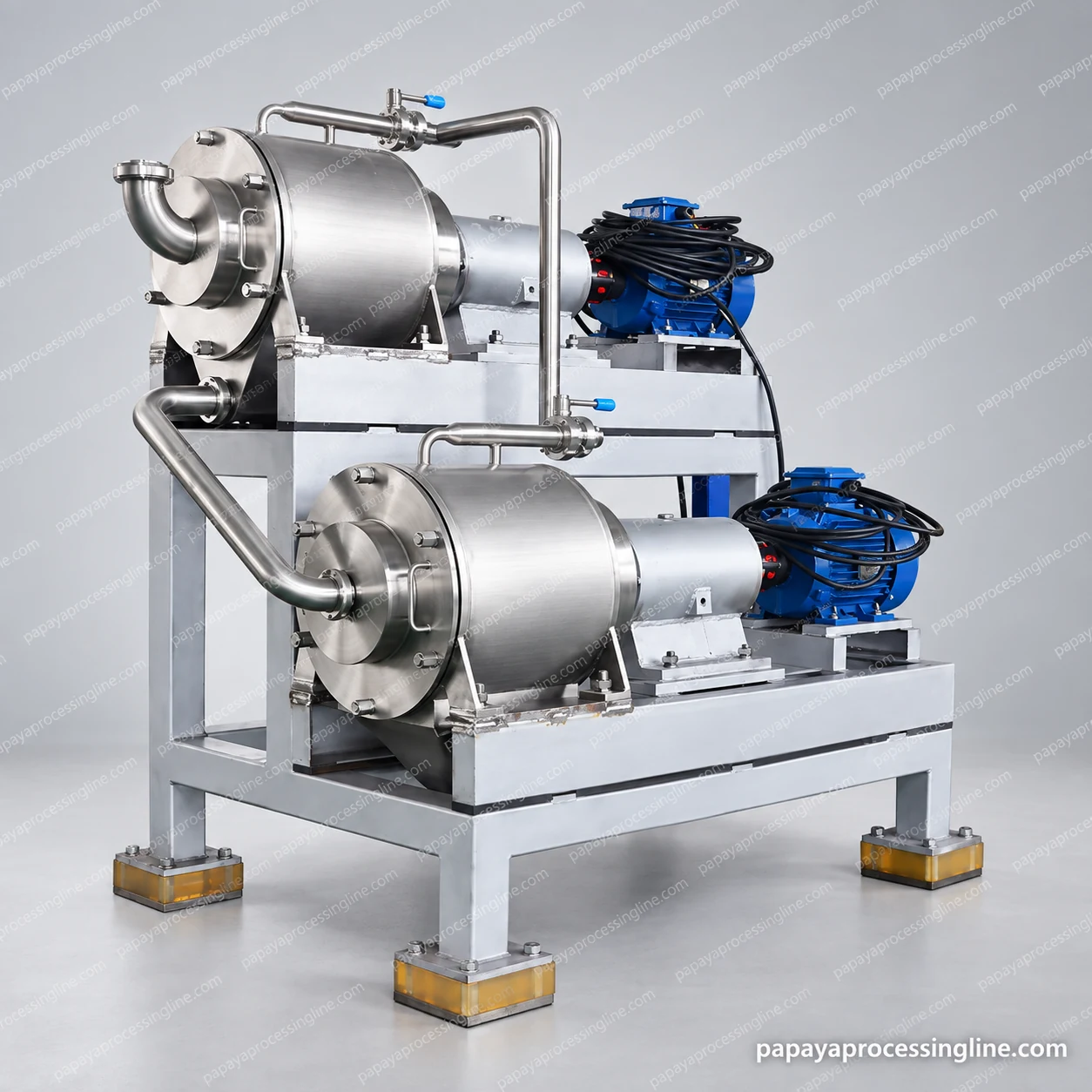
Define the product at the line outlet
A photograph or description of the finished food is not always enough to specify the papaya ingredient. Identify whether the line should supply a smooth puree, a controlled pulp fraction or prepared flesh for a different downstream operation.
Use a reference sample and a documented comparison method where available. This gives the pulper-finisher discussion a concrete target and avoids treating a catalogue screen range as a complete product specification.
Keep raw fruit and equipment changes separate
Fruit ripeness, preparation loss and the condition of the flesh entering the machine can change the recovered product. Record these conditions before attributing every texture difference to the screen.
Screening, transfer and thermal handling are connected stages. Share the actual product temperature and flow behaviour so the receiving pump and thermal passage are considered against the same puree.
| Selection point | Information to confirm |
|---|---|
| Texture target | Agreed visual and application-specific sample |
| Raw material | Fruit condition and preparation method |
| Transfer basis | Product temperature and observed flow behaviour |
| Receiving stage | Mixing, cooking, treatment or bulk filling |
Review the sample with the complete material balance
Evaluate usable texture alongside recovered quantity and rejects. A product that looks finer but does not fit the downstream duty may not be the right line result.
Include how the product will be used in your enquiry. This allows the discussion to focus on the necessary preparation and refinement stages, rather than adding equipment that does not improve the required ingredient.
Questions in practice
Before connecting the equipment
Can texture be guaranteed from the equipment photograph?
A photograph shows configuration, not the result for your fruit lot and application. Establish the texture target and confirm it with representative material.