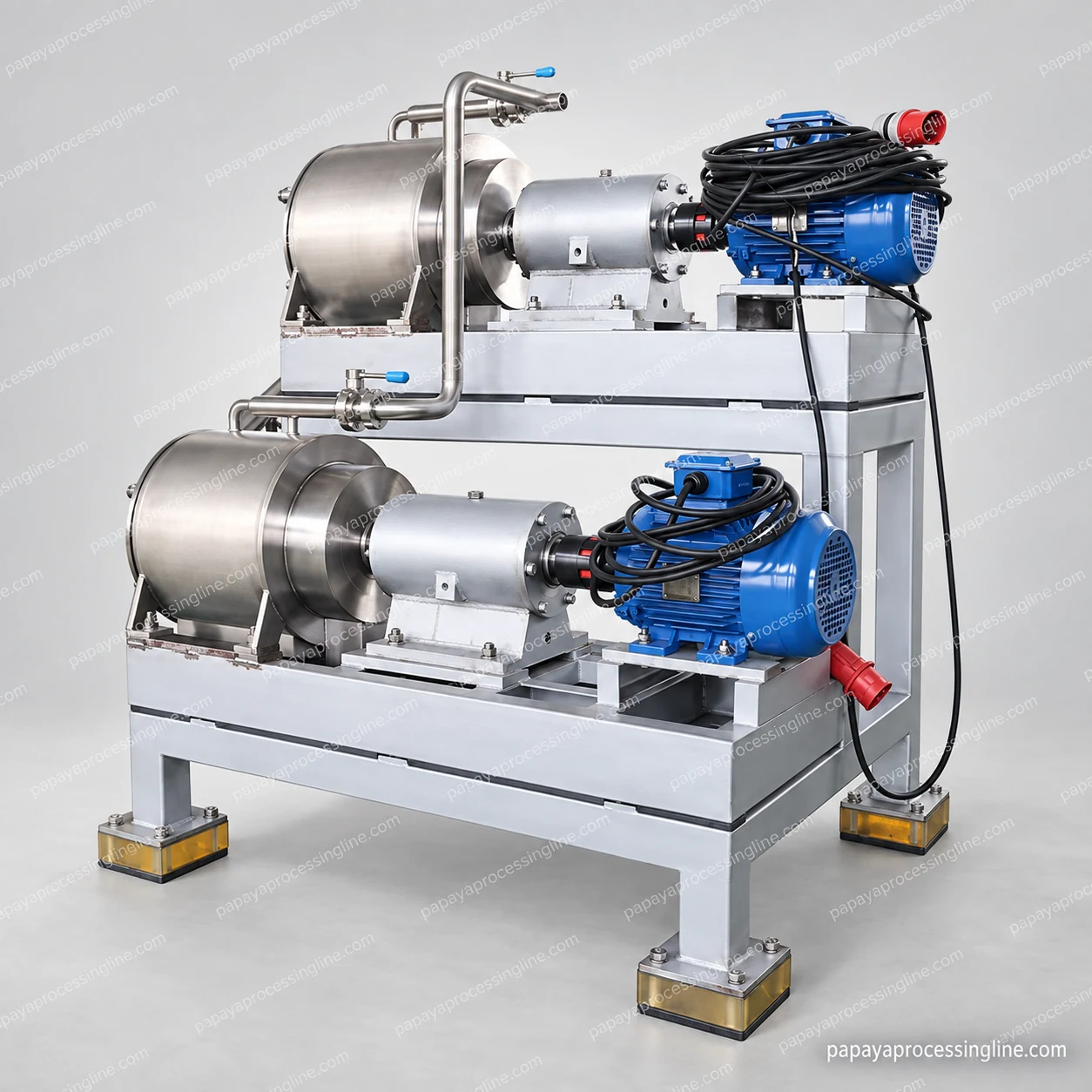
Understand the two-stage material route
Prepared flesh enters the first chamber for pulp recovery. The recovered material then passes to the linked finishing chamber for further screening, while rejected material leaves through its defined outlets.
The pictured assembly has two processing stages on one frame. Separate drives and linked pulp flow allow the two duties to be discussed individually, without presenting them as two unrelated supplied machines.
Use a sample target rather than a screen number alone
A finer opening can change particle separation, but it does not by itself establish usable recovery or an acceptable ingredient. Compare the final sample with the customer texture requirement.
Include the incoming fruit lot and preparation method in the trial record. Otherwise a difference in screen result may actually reflect a difference in the flesh arriving at the machine.
| Selection point | Information to confirm |
|---|---|
| Feed | Representative prepared flesh and ripeness condition |
| Target | Agreed sample texture and particle appearance |
| Recovery | Product and reject quantities for each stage |
| Access | Screen removal, inspection and cleaning arrangement |
Agree the comparison before choosing the configuration
Record how the sample will be evaluated and what the receiving application needs. A beverage base, a smooth bulk puree and a coarser fruit ingredient can require different texture boundaries.
Discuss the two screen stages, feed arrangement and cleaning access together. The final model and operating duty should follow the agreed material and acceptance basis, rather than a universal papaya screen recommendation.
Questions in practice
Before connecting the equipment
Does the smallest screen always give the best puree?
The useful choice balances the required texture with recovery and separation behaviour. Judge it with representative material and the intended product sample.