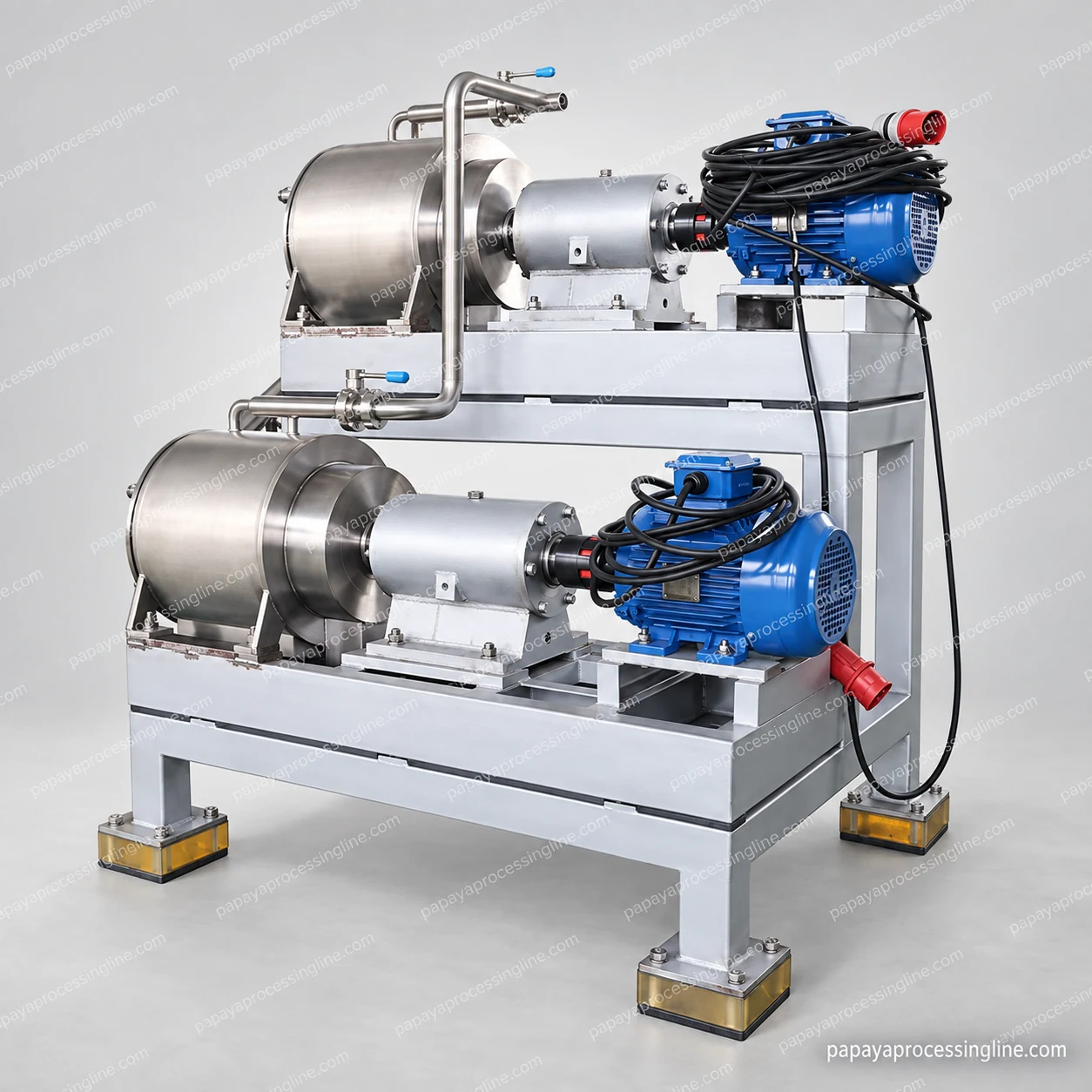
Look beyond the machine footprint
The two-stage assembly needs access to its chambers, screens and drives. A footprint dimension alone does not show the room required to remove components or work around the equipment.
Check the proposed position against adjacent conveyors, vessels and pipework. Avoid routing new connections across areas required for normal access to the pulper.
Connect inspection to the operating result
Screen condition and accessible residue points belong in the equipment-specific cleaning and inspection procedure. Product texture and reject behaviour can provide useful observations to discuss when an operating result changes.
Service tasks should follow the machine instructions and site procedures. The website does not substitute a model-specific maintenance schedule or authorize work on a running machine.
| Selection point | Information to confirm |
|---|---|
| Position | Machine space and component-removal access |
| Screens | Inspection and equipment-specific removal arrangement |
| Drives | Access to the two-stage drive configuration |
| Connections | Product, reject and cleaning routes around the machine |
Make service access part of the quotation
Send the available layout and any access restrictions with the pulper request. This helps place the inlet, outlets and service interfaces in a workable arrangement rather than discovering a conflict after installation.
For an existing line, share photographs of the surrounding equipment and current access points. A replacement should be reviewed against the complete working area, not only the old machine footprint.
Questions in practice
Before connecting the equipment
Is the quoted footprint all the space that is needed?
Allow for the specified component-removal, cleaning and service access as well as the machine itself. Confirm these boundaries in the layout review.