Prepare flesh rather than relying on the pulper to peel
The photographed two-stage machine is a pulper-finisher, not an automatic papaya peeler or a dedicated seed-removal system. Its useful inlet is prepared flesh with a defined feed method.
Set out where fruit is opened, how peel and seeds leave the usable stream and how flesh reaches the machine. These boundaries make the scope concrete even when preparation remains a manual work area.
Coordinate the work area with the conveyor
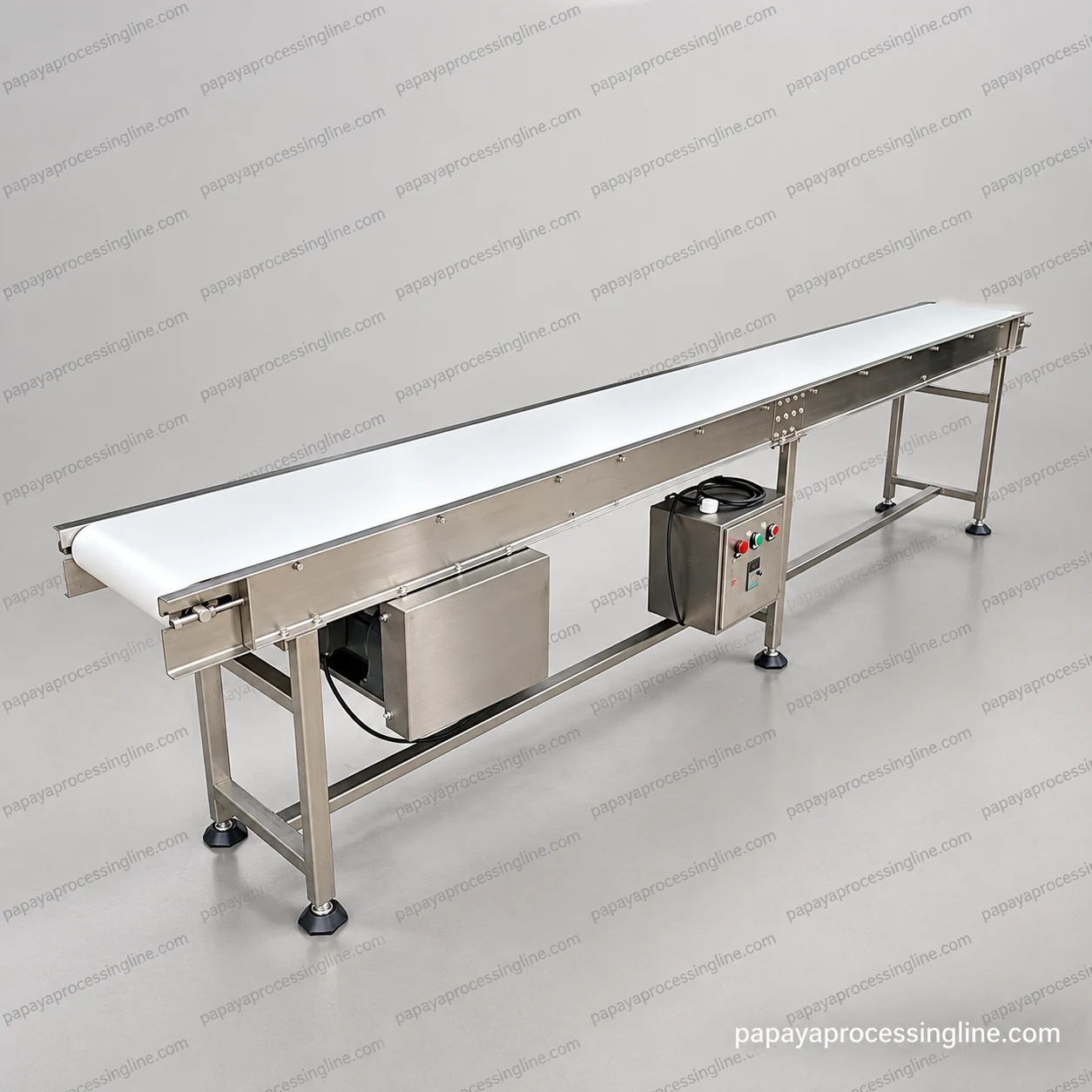
An inspection belt provides access to fruit before preparation. Its position, operator reach and discharge should fit the work surfaces and collection method without requiring an uncontrolled drop into the machine.
Separate usable flesh collection from the residue route. The arrangement should also allow direct access for cleaning, rather than concealing preparation residues in difficult transfer points.
| Selection point | Information to confirm |
|---|---|
| Fruit condition | Typical size range and accepted ripeness |
| Preparation | Cutting, peeling and seed-removal method |
| Feed interface | Collection point, height and delivery rhythm |
| Residues | Separate peel and seed handling route |
Discuss preparation as an explicit line boundary
Existing preparation equipment can remain in place if the feed and cleaning interfaces fit. Provide photographs, a floor sketch and the available prepared-flesh duty rather than assuming a complete new installation is required.
Where automation is requested, identify the specific operation that needs to change. Do not infer automatic cutting or peeling from a conveyor photograph or from the presence of a pulper downstream.
Questions in practice
Before connecting the equipment
Can whole unprepared papaya be specified as this pulper feed?
The illustrated route defines prepared flesh at the pulper inlet. Establish cutting, peeling and seed separation upstream and confirm the representative feed in the equipment discussion.