Identify the equipment that needs direct access
Conveyors, preparation work surfaces and accessible accumulations of peel or seeds need direct removal and inspection. The open fruit-handling area has different cleaning needs from a closed product pipe.
Pulper screens and removable parts require the access specified for the equipment. Do not assume that a nearby CIP connection removes the need to inspect or dismantle a component where appropriate.
Map the closed cleaning routes
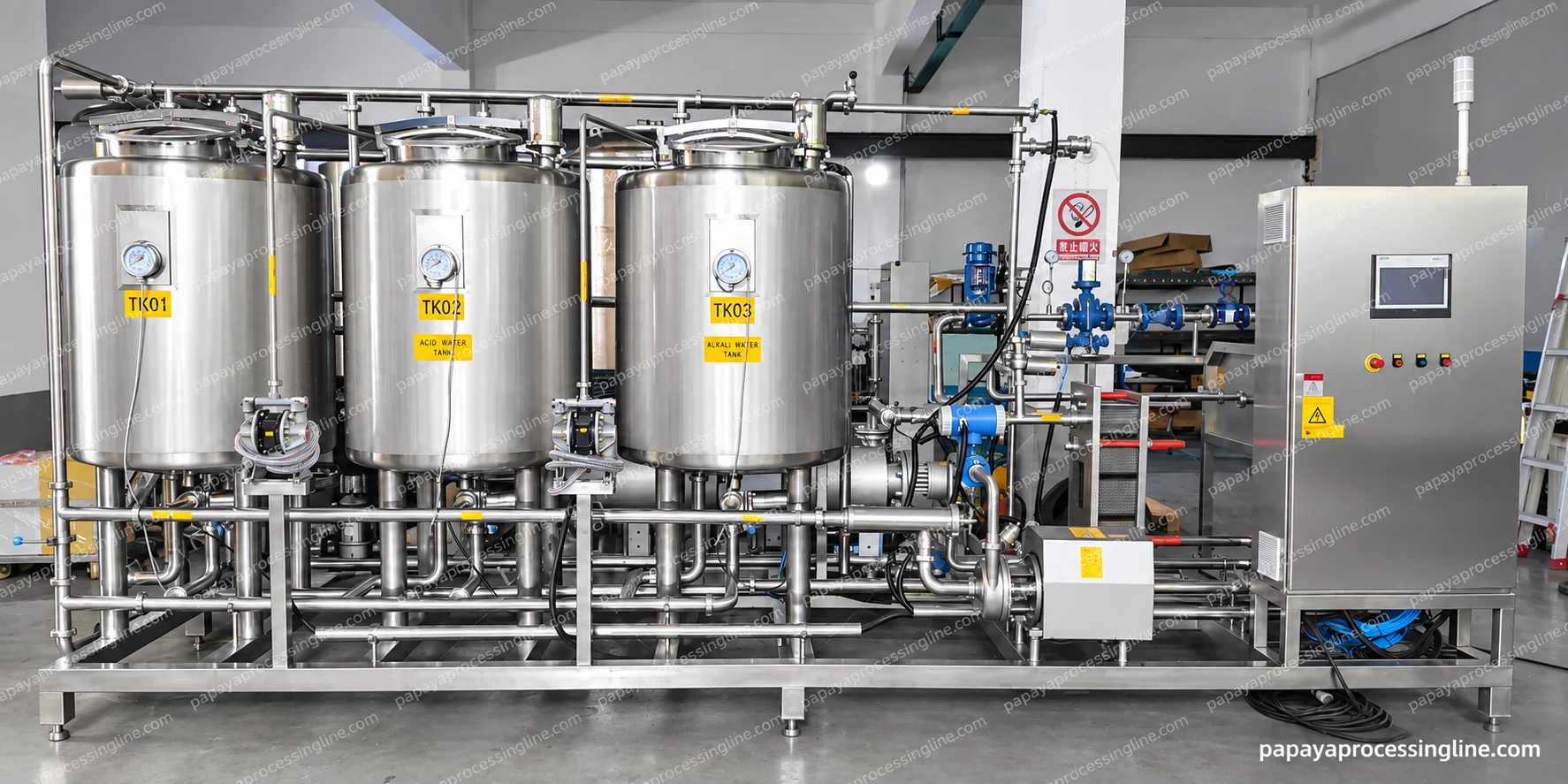
List the tanks, pipes and connected thermal or filling sections included in each circulation circuit. Specify the supply and return connections, isolation states and the points where a circuit ends.
The cleaning programme should suit the soil, equipment and chosen agents. Its operating conditions and acceptance checks belong to the agreed procedure rather than a generic website recipe.
| Selection point | Information to confirm |
|---|---|
| Open area | Accessible residue removal and inspection points |
| Pulper | Screen removal and equipment-specific cleaning access |
| Closed circuit | Defined CIP supply, return and isolation routes |
| Acceptance | Records and checks before production resumes |
Keep cleaning and sterile-state procedures distinct
Cleaning and sterilization address different objectives. Where an aseptic product route is selected, establish its sterile-state procedures and controls alongside the product treatment and filler design.
Send the equipment scope and existing cleaning arrangement with your enquiry. This allows a CIP discussion to focus on actual circulation routes rather than treating one recipe as a universal line solution.
Questions in practice
Before connecting the equipment
Does CIP replace all manual cleaning?
No. Closed circulation routes, open preparation surfaces and removable machine parts have different access and procedure requirements.