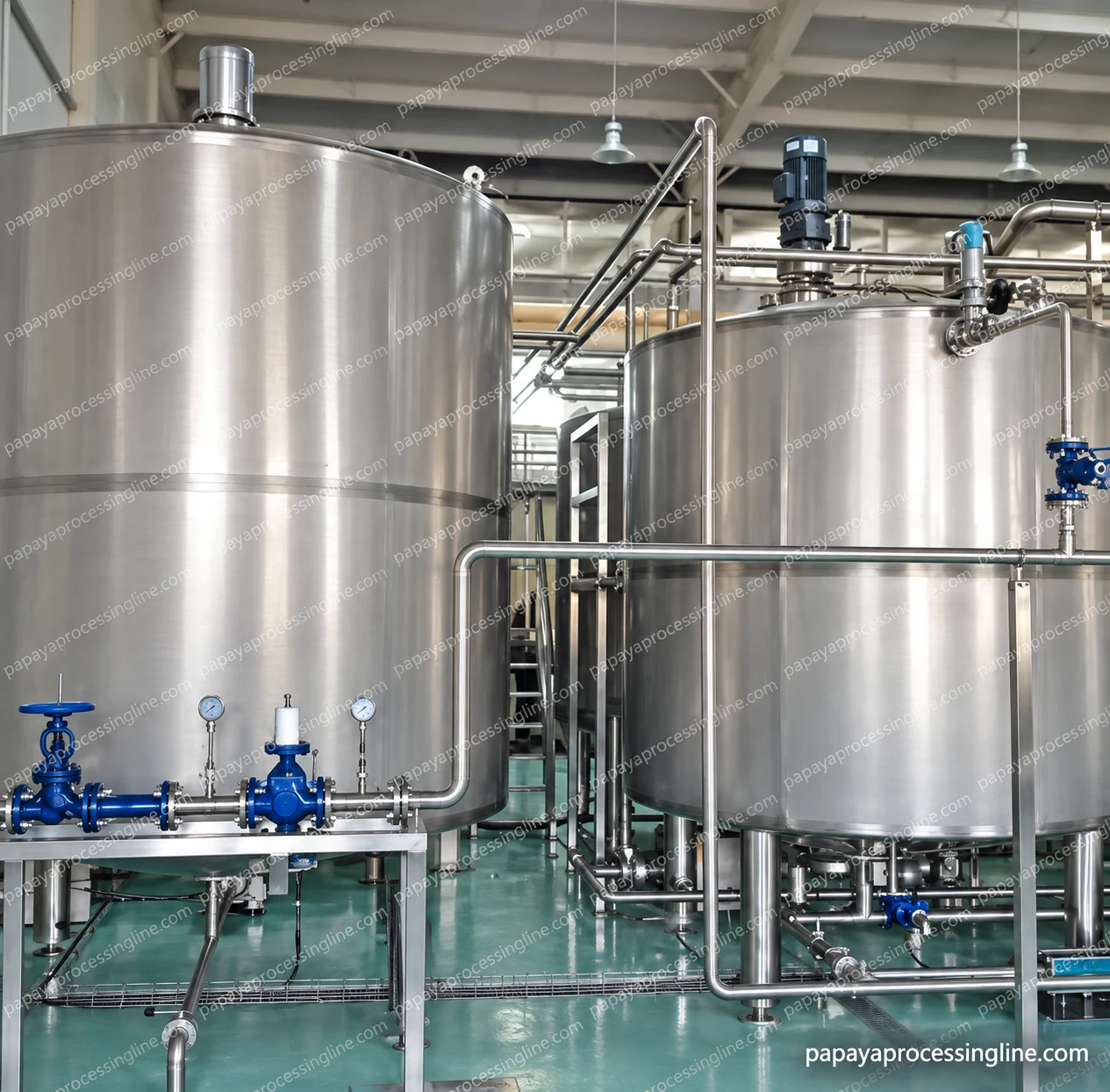
Separate working volume from vessel size
The volume available for buffering is the usable operating range between the defined levels. It is not automatically the entire nominal vessel capacity, and it must fit the outlet and product-handling arrangement.
Describe how puree enters and leaves the vessel during normal operation. A batch receiver and a continuous thermal feed create different accumulation patterns even when their daily product quantities are similar.
Identify the pauses the buffer is meant to cover
Record short pulper interruptions, downstream pauses and the agreed restart sequence. The buffer can help smooth a defined timing difference; it should not be treated as unlimited storage when the next stage is unavailable.
Set out what stops upstream feed before the vessel reaches its operating limit. Controls, inlet position and the receiving machine are part of the buffer scope rather than separate assumptions.
| Selection point | Information to confirm |
|---|---|
| Process pattern | Continuous or batch inlet and outlet demand |
| Usable range | Operating levels and product remaining below the outlet |
| Interruption | Defined pause and restart conditions |
| Cleaning | Product drain, access and CIP boundary |
Include the tank in the equipment arrangement
Provide the available floor area and access required around the vessel. Pipe routes, screen-removal clearance nearby, drains and service connections can determine where the buffer can usefully sit.
Send the upstream and downstream duties with the quotation request. A vessel size alone is not enough to establish the working buffer required by a connected papaya line.
Questions in practice
Before connecting the equipment
Can a bigger tank solve every line imbalance?
A buffer supports a defined operating rhythm. A persistently insufficient downstream duty still requires a capacity or process-scope change.