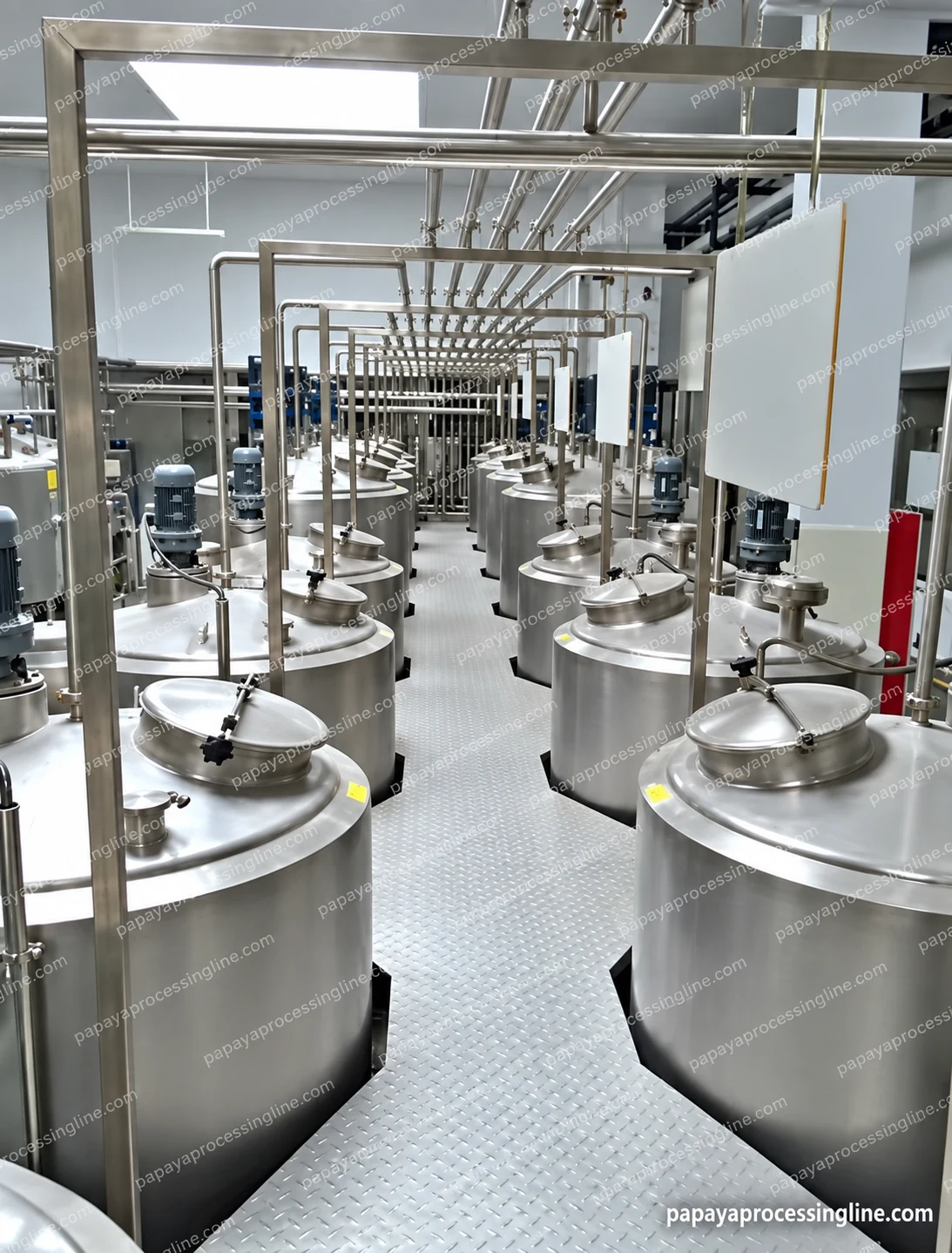
Separate fruit preparation from nectar formulation
Nectar production combines a papaya ingredient with the selected formulation. The puree line supplies that ingredient; the complete formulated beverage rate can differ considerably from fresh-fruit intake or recovered puree flow.
Record the papaya ingredient requirement on a common hourly or batch basis. If a finished nectar output is the starting target, establish the formulation requirement before choosing the pulp recovery duty.
Describe how the puree will enter the blend
A coarse ingredient and a smooth puree can behave differently during mixing and transfer. Share a representative sample or texture reference and explain whether the receiving operation works in batches or as a continuous flow.
Buffer volume and the product pump should support that receiving rhythm. Vessel connections, available feed pressure and cleaning access matter as much as the nominal ingredient quantity.
| Selection point | Information to confirm |
|---|---|
| Production basis | Ingredient rate distinct from finished nectar output |
| Feed pattern | Batch delivery or continuous flow |
| Texture | Agreed puree sample and residual particle limits |
| Transfer | Receiving vessel inlet and operating temperature |
Agree the boundary of the equipment quotation
Identify which operations already exist: fruit preparation, pulping, ingredient holding, blending, treatment and filling. This avoids duplicating a stage and makes the proposed interfaces easier to evaluate.
Treatment settings and finished-product storage conditions require a product-specific process design. Provide the formulation context to the equipment discussion without relying on a universal papaya heating schedule.
Questions in practice
Before connecting the equipment
Can a nectar output target size the pulper directly?
First convert the beverage target into the required papaya ingredient flow using your formulation basis. The pulper duty and finished beverage duty are separate values.